
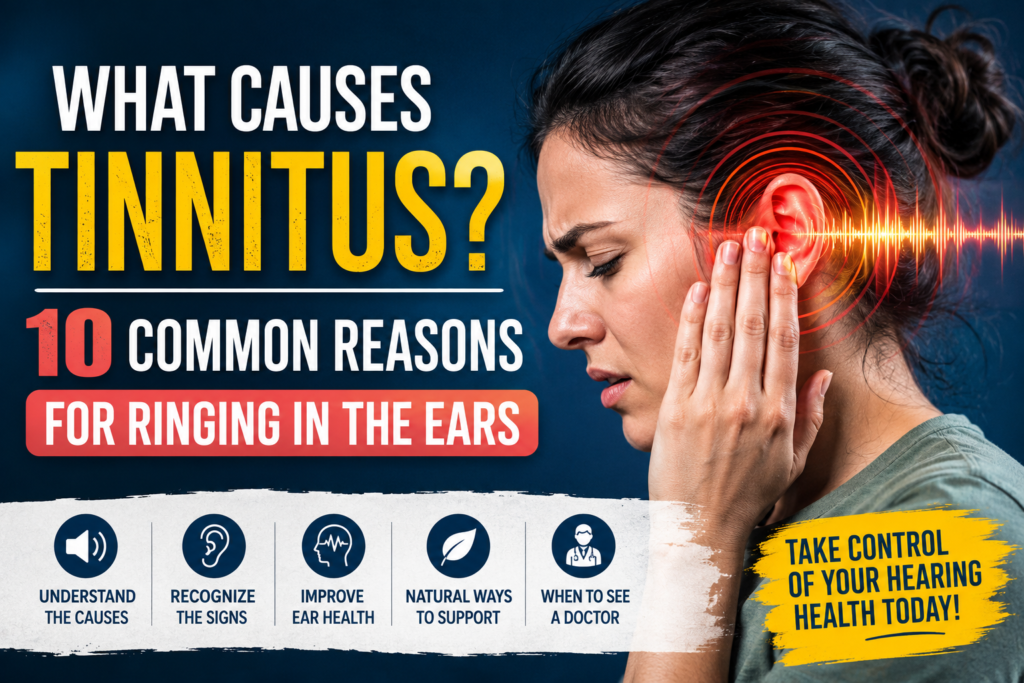
What Causes Tinnitus? 10 Common Reasons for Ringing in the Ears
Last Updated: July 2026
Reading Time: 10 Minutes
Contents
- What Causes Tinnitus? 10 Common Reasons for Ringing in the Ears
- What Causes Tinnitus?
- What Is Tinnitus?
- Is Tinnitus Common?
- Can More Than One Cause Be Responsible?
- When Should You See a Doctor for Tinnitus?
- Can Tinnitus Go Away on Its Own?
- Natural Ways to Support Hearing Health
- Hearing Wellness Supplements
- Frequently Asked Questions
- What is the most common cause of tinnitus?
- Can tinnitus be permanent?
- Is tinnitus a sign of hearing loss?
- Can stress make tinnitus worse?
- When should I worry about ringing in my ears?
- Can earwax cause tinnitus?
- Can lifestyle changes help reduce tinnitus?
- Is there a cure for tinnitus?
- Final Thoughts
- Medical Disclaimer
What Causes Tinnitus?
Hearing a persistent ringing, buzzing, hissing, or humming sound when no external noise is present can be frustrating and sometimes worrying. This condition is known as tinnitus, and it affects millions of adults worldwide. While many people describe it as “ringing in the ears,” tinnitus can also sound like clicking, roaring, whistling, or even pulsing noises.
If you’ve been searching what causes tinnitus, you’re not alone. Tinnitus is a symptom rather than a disease itself, meaning it can develop for many different reasons. In some cases, it is temporary and resolves on its own. In others, it may be linked to hearing loss, prolonged noise exposure, certain medical conditions, or lifestyle factors.
The good news is that understanding the underlying cause is the first step toward finding the most appropriate management strategy. Although there is currently no universal cure for tinnitus, many people experience meaningful improvements through proper medical evaluation, hearing protection, lifestyle adjustments, and, when appropriate, hearing support strategies.
In this guide, we’ll explore the 10 most common causes of tinnitus, explain when ringing in the ears may require medical attention, and share practical tips to help support long-term hearing health.
What Is Tinnitus?
Tinnitus is the perception of sound without an external source. Instead of coming from the environment, the sound is generated somewhere within the hearing system or the brain’s processing of sound.
People experience tinnitus differently. Some hear a faint ringing that comes and goes, while others notice a constant buzzing, humming, or high-pitched tone that becomes more noticeable in quiet environments or at bedtime.
Tinnitus may affect one ear, both ears, or seem to come from inside the head. The loudness and frequency can vary from person to person and may even change throughout the day.
Although tinnitus itself is not usually dangerous, it can interfere with concentration, sleep, communication, and overall quality of life if it becomes persistent.
Is Tinnitus Common?
Yes. Tinnitus is one of the most common hearing-related symptoms in adults.
The likelihood of experiencing tinnitus tends to increase with age, especially among people with age-related hearing changes or a history of prolonged exposure to loud sounds. Construction workers, musicians, factory employees, military personnel, and individuals who frequently use headphones at high volume may have a higher risk.
However, tinnitus can also affect younger adults and even children, depending on the underlying cause.
Understanding what causes tinnitus can help you identify possible risk factors and know when it’s time to seek professional medical advice.
In the next section, we’ll look at the 10 most common reasons for ringing in the ears, starting with the leading cause: hearing loss.
Age-Related Hearing Loss (Presbycusis)
One of the most common answers to what causes tinnitus is age-related hearing loss, also known as presbycusis. As we grow older, the tiny sensory hair cells inside the inner ear gradually become less effective. Because these cells do not naturally regenerate, the brain receives fewer sound signals and may compensate by creating phantom noises, resulting in tinnitus.
People with age-related hearing loss often notice:
- Difficulty understanding conversations, especially in noisy places.
- Frequently asking others to repeat themselves.
- Turning up the TV or radio volume.
- Ringing or buzzing that becomes more noticeable at night.
Although age-related hearing loss cannot always be reversed, early evaluation and healthy hearing habits may help preserve your remaining hearing.
Exposure to Loud Noise
Long-term exposure to loud sounds is another leading cause of tinnitus. Loud music, concerts, power tools, heavy machinery, firearms, and noisy workplaces can damage the delicate hair cells inside the cochlea.
Sometimes, ringing in the ears appears immediately after a loud event and disappears within a few hours. However, repeated exposure may lead to permanent hearing damage and chronic tinnitus.
You can reduce your risk by:
- Wearing hearing protection in noisy environments.
- Keeping headphone volume below 60%.
- Taking listening breaks during extended headphone use.
- Limiting time spent in high-noise settings.
Protecting your ears today can help reduce hearing-related problems later in life.
Earwax Buildup
A surprising answer to what causes tinnitus is excessive earwax. Earwax plays an important role in protecting the ear canal, but too much can block sound from reaching the eardrum efficiently.
Symptoms may include:
- Ringing in one ear.
- Muffled hearing.
- A feeling of fullness in the ear.
- Temporary hearing difficulty.
Never insert cotton swabs or sharp objects into your ears, as they can push wax deeper or injure the ear canal. If you suspect earwax blockage, have it assessed and removed safely by a qualified healthcare professional.
Ear Infections and Sinus Congestion
Temporary tinnitus can also develop during an ear infection or severe sinus congestion. Inflammation and fluid buildup behind the eardrum may interfere with normal hearing, creating ringing, buzzing, or pressure sensations.
Common symptoms include:
- Ear pain.
- Reduced hearing.
- Ear pressure.
- Fever (in some infections).
- Ringing that improves once the infection resolves.
If ear pain, drainage, fever, or hearing loss persists, seek medical evaluation rather than attempting self-treatment.
Certain Medications
Some prescription and over-the-counter medications may contribute to tinnitus, particularly when taken at high doses or for extended periods. This is sometimes referred to as drug-induced tinnitus.
Examples may include certain:
- High-dose aspirin products.
- Some antibiotics.
- Certain chemotherapy medications.
- Loop diuretics.
- Some anti-inflammatory medicines.
Do not stop taking prescribed medication without speaking to your healthcare provider. If you notice ringing in your ears after starting a new medicine, discuss your symptoms with your doctor or pharmacist. They can determine whether the medication may be contributing and whether an alternative treatment is appropriate.
These five conditions account for many cases of tinnitus, but they are far from the only possible causes. In the next section, we’ll cover five additional causes, including stress, high blood pressure, jaw disorders, Ménière’s disease, and head or neck injuries.
Stress and Anxiety
Many people are surprised to learn that emotional stress can play a significant role in tinnitus. While stress may not always be the original cause, it can make ringing in the ears feel much louder and more noticeable.
During periods of anxiety, the body’s stress response becomes more active, which may increase awareness of internal sounds and make it harder for the brain to ignore tinnitus. Many people notice their symptoms worsen during stressful situations, after poor sleep, or during periods of emotional exhaustion.
Signs that stress may be contributing include:
- Ringing that becomes louder during stressful situations.
- Difficulty sleeping because of tinnitus.
- Increased anxiety or irritability.
- Trouble concentrating at work or home.
Stress management techniques such as regular exercise, mindfulness, deep breathing, quality sleep, and relaxation exercises may help reduce the emotional impact of tinnitus for some individuals.
High Blood Pressure and Poor Circulation
Healthy blood flow is essential for the delicate structures inside the inner ear. Conditions that affect circulation, including high blood pressure, hardened arteries, or other cardiovascular problems, may contribute to tinnitus in some people.
In particular, some individuals experience pulsatile tinnitus, where the ringing or whooshing sound seems to match their heartbeat. This type of tinnitus should always be evaluated by a healthcare professional because it can sometimes indicate an underlying vascular condition.
To support overall cardiovascular and hearing health:
- Monitor your blood pressure regularly.
- Follow a heart-healthy diet.
- Stay physically active.
- Avoid smoking.
- Manage cholesterol and blood sugar as recommended by your healthcare provider.
Improving cardiovascular health benefits not only the heart but also the tiny blood vessels that nourish the inner ear.
Temporomandibular Joint (TMJ) Disorders
The temporomandibular joint (TMJ) connects your jawbone to your skull. Because this joint is located close to the ear and shares nerves and muscles with the hearing system, TMJ disorders can sometimes trigger or worsen tinnitus.
Common symptoms of TMJ problems include:
- Jaw pain or stiffness.
- Clicking or popping when opening the mouth.
- Difficulty chewing.
- Facial discomfort.
- Ringing in the ears.
If tinnitus is accompanied by jaw pain or frequent teeth grinding, a dentist or TMJ specialist may recommend treatment options that address the underlying jaw issue.
Ménière’s Disease
Ménière’s disease is a chronic inner ear disorder that affects hearing and balance. Although it is less common than age-related hearing loss or noise exposure, it is an important possible answer to what causes tinnitus.
People with Ménière’s disease often experience:
- Episodes of severe dizziness (vertigo).
- Ringing or buzzing in one ear.
- A feeling of fullness or pressure in the ear.
- Fluctuating hearing loss.
Symptoms often occur in episodes and may vary in intensity. Anyone experiencing repeated vertigo together with hearing changes should seek medical evaluation promptly.
Head or Neck Injuries
Injuries involving the head, neck, or ears can sometimes affect the auditory nerves, inner ear structures, or blood flow, leading to tinnitus.
Potential causes include:
- Sports injuries.
- Motor vehicle accidents.
- Falls.
- Whiplash injuries.
- Concussions.
Depending on the severity of the injury, tinnitus may be temporary or long-lasting. Medical assessment is especially important if ringing in the ears begins after trauma or is accompanied by hearing loss, dizziness, severe headache, or neurological symptoms.
Can More Than One Cause Be Responsible?
Absolutely. In many cases, tinnitus develops because of several contributing factors rather than a single cause. For example, an older adult may have mild age-related hearing loss, long-term exposure to loud noise, and high blood pressure—all of which can influence tinnitus symptoms.
This is why identifying the exact cause often requires a comprehensive hearing evaluation and medical history rather than relying on symptoms alone.
Understanding what causes tinnitus is the first step toward finding the most appropriate management strategy and protecting your long-term hearing health.
When Should You See a Doctor for Tinnitus?
Occasional ringing in the ears after attending a loud concert or being exposed to sudden noise is usually temporary and often improves within a few hours or days. However, tinnitus that persists, becomes more noticeable, or is accompanied by other symptoms should not be ignored.
You should schedule a medical evaluation if:
- Ringing in your ears lasts longer than one week.
- Tinnitus affects your sleep, concentration, or daily activities.
- You notice hearing loss in one or both ears.
- The ringing is present in only one ear.
- You experience dizziness, balance problems, or vertigo.
- Tinnitus developed after a head or neck injury.
- You hear a rhythmic “whooshing” sound that matches your heartbeat.
A healthcare professional may recommend a hearing test, examine your ears for blockages or infection, review your medications, and determine whether additional testing is needed.
Early evaluation can help identify treatable causes and rule out more serious medical conditions.
Can Tinnitus Go Away on Its Own?
One of the most frequently asked questions after “what causes tinnitus” is whether it will disappear without treatment.
The answer depends on the underlying cause.
Temporary tinnitus caused by loud noise exposure, an ear infection, or earwax buildup may improve once the underlying issue has been resolved.
However, tinnitus associated with permanent hearing loss or certain medical conditions may persist for months or even years. Although it may not completely disappear, many people learn to manage their symptoms successfully with professional guidance, hearing protection, and healthy lifestyle habits.
Natural Ways to Support Hearing Health
While there is no guaranteed way to eliminate tinnitus, adopting healthy daily habits may help support your hearing and overall ear health.
Protect Your Ears from Loud Noise
Wear ear protection when using power tools, attending concerts, or working in noisy environments. Lower the volume on headphones and take regular listening breaks.
Maintain Heart Health
Healthy blood circulation supports every part of the body, including the tiny blood vessels that supply the inner ear. Regular physical activity, balanced nutrition, and blood pressure management all contribute to long-term hearing wellness.
Prioritize Quality Sleep
Poor sleep can make tinnitus feel more noticeable. Maintaining a regular sleep schedule and creating a quiet, relaxing bedtime routine may help reduce nighttime awareness of ringing in the ears.
Manage Stress
Stress and anxiety can increase the perception of tinnitus. Relaxation techniques such as meditation, breathing exercises, yoga, or spending time outdoors may help improve overall well-being.
Avoid Smoking
Smoking reduces blood flow throughout the body and may increase the risk of hearing-related problems. Quitting smoking benefits both hearing health and overall cardiovascular health.
Eat a Balanced Diet
A diet rich in fruits, vegetables, whole grains, lean proteins, and healthy fats provides nutrients that support overall wellness. Although no specific food cures tinnitus, good nutrition plays an important role in maintaining healthy body systems.
Hearing Wellness Supplements
Some adults also choose to include hearing wellness supplements as part of their broader health routine. Products containing antioxidant-rich botanical ingredients are marketed to support normal hearing health and healthy circulation.
While supplements are not a cure for tinnitus or hearing loss, some people explore them alongside healthy lifestyle habits after discussing their options with a healthcare professional.
If you’re researching hearing wellness supplements, be sure to evaluate ingredient quality, manufacturing standards, safety information, and independent editorial reviews before making a purchasing decision.
For readers interested in learning more, we’ve prepared a comprehensive AudiFort Review covering its ingredients, how it works, potential benefits, safety considerations, pricing, and our complete editorial assessment.
Frequently Asked Questions
What is the most common cause of tinnitus?
The most common cause of tinnitus is age-related hearing loss or prolonged exposure to loud noise. Damage to the tiny sensory hair cells in the inner ear can alter how the brain processes sound, leading to ringing, buzzing, or other phantom noises.
Can tinnitus be permanent?
Yes. Tinnitus can be temporary or permanent depending on its underlying cause. Ringing caused by loud noise exposure or an ear infection may improve once the issue resolves, while tinnitus associated with permanent hearing loss may persist. A healthcare professional can help determine the likely cause.
Is tinnitus a sign of hearing loss?
Not always, but tinnitus and hearing loss often occur together. Many people with tinnitus also experience some degree of hearing loss, particularly as they age. A comprehensive hearing evaluation can help identify whether hearing loss is contributing to your symptoms.
Can stress make tinnitus worse?
Yes. Emotional stress and anxiety do not necessarily cause tinnitus, but they can increase your awareness of ringing in the ears and make symptoms feel more intense. Managing stress may help reduce the impact tinnitus has on daily life.
When should I worry about ringing in my ears?
Seek medical attention if tinnitus:
Lasts longer than a week.
Occurs suddenly.
Is present in only one ear.
Is accompanied by dizziness, severe ear pain, or hearing loss.
Sounds like a heartbeat (pulsatile tinnitus).
Prompt evaluation can help identify underlying medical conditions that may require treatment.
Can earwax cause tinnitus?
Yes. Excessive earwax can block the ear canal, reduce hearing, and sometimes cause temporary ringing in the ears. Earwax should be removed safely by a qualified healthcare professional if it is causing symptoms.
Can lifestyle changes help reduce tinnitus?
Healthy lifestyle habits may help some individuals manage tinnitus more effectively. Protecting your ears from loud noise, managing blood pressure, reducing stress, sleeping well, avoiding smoking, and maintaining a balanced diet all contribute to better overall hearing health.
Is there a cure for tinnitus?
Currently, there is no universal cure for tinnitus. Treatment depends on the underlying cause and may include hearing aids, sound therapy, counseling, treatment of medical conditions, or lifestyle changes. Some people also explore hearing wellness supplements as part of their overall health routine, although supplements are not intended to cure tinnitus.
Final Thoughts
Understanding what causes tinnitus is the first step toward protecting your hearing and improving your quality of life. While occasional ringing may be temporary, persistent tinnitus should never be ignored, especially if it is accompanied by hearing loss, dizziness, or other concerning symptoms.
The good news is that many causes of tinnitus can be identified through a professional evaluation, and there are practical strategies that may help reduce its impact. Protecting your hearing from loud noise, maintaining good cardiovascular health, managing stress, and seeking timely medical advice are all important steps toward long-term hearing wellness.
If you’re researching nutritional ways to support your hearing health, you may also be interested in our comprehensive AudiFort Review, where we examine the ingredients, how the formula works, safety information, customer feedback, pricing, and our independent editorial verdict.
Medical Disclaimer
This article is provided for educational and informational purposes only and should not be considered medical advice, diagnosis, or treatment. The information presented is not intended to replace consultation with a qualified physician, audiologist, or other licensed healthcare professional.
Tinnitus can have many different causes, and proper diagnosis is essential. If you experience sudden hearing loss, severe ear pain, dizziness, persistent tinnitus, or any other concerning symptoms, seek prompt medical evaluation.
Dietary supplements are not intended to diagnose, treat, cure, or prevent any disease. Always consult your healthcare provider before starting any new supplement, particularly if you are pregnant, breastfeeding, have a medical condition, or take prescription medications.
Last Updated: July 2026